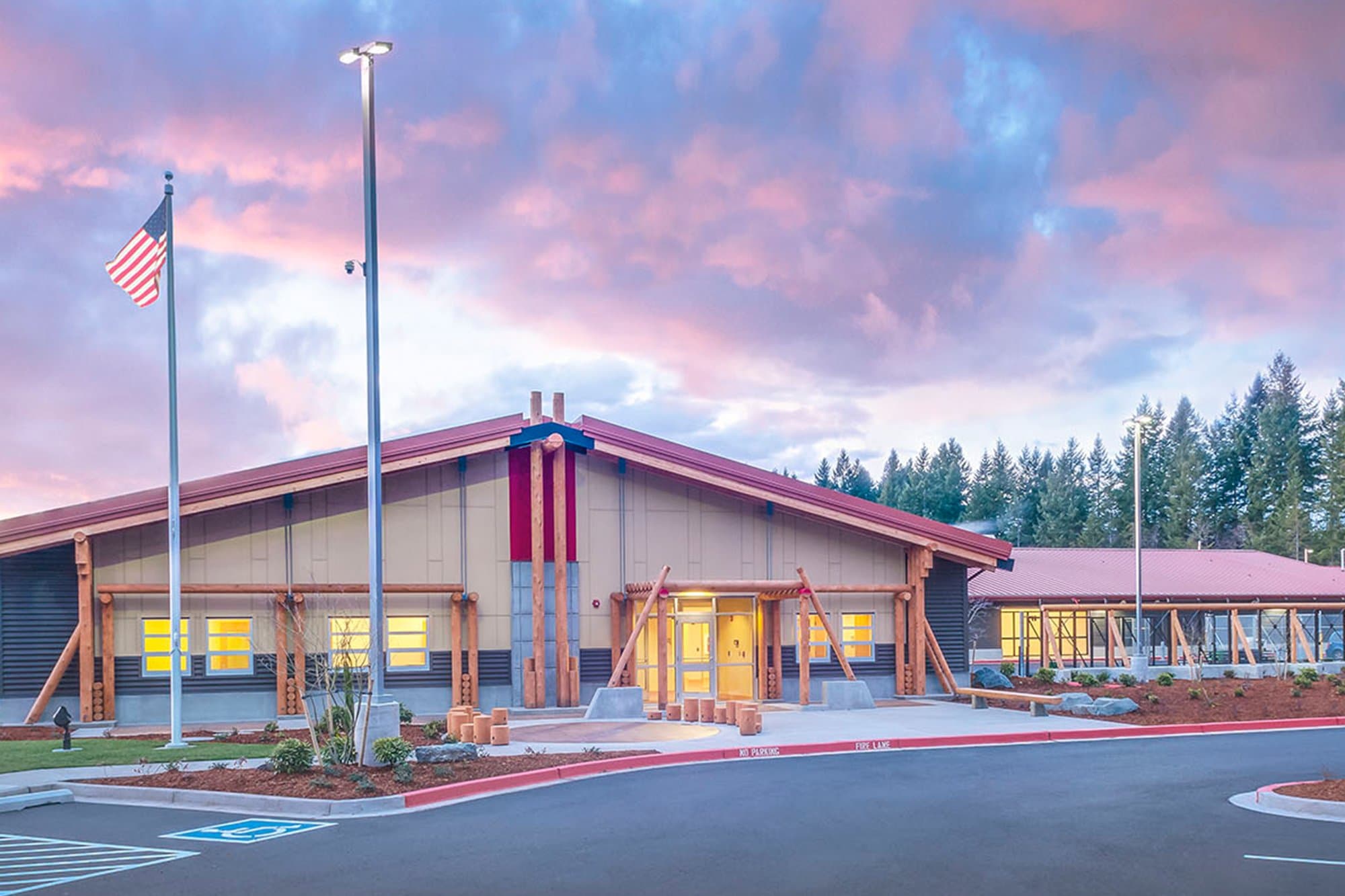
Project Overview
Justice facilities designed specifically for Native American tribal communities, requiring deep understanding of tribal court systems, cultural practices, and community integration alongside standard security requirements.
This work represented a unique challenge in justice architecture: creating facilities that respect tribal sovereignty and cultural traditions while meeting federal standards and security requirements.
Design Considerations
Tribal justice facilities differ fundamentally from conventional corrections:
- Tribal Sovereignty – Facilities serving tribal court systems with distinct legal frameworks
- Cultural Integration – Architecture reflecting tribal identity and traditions
- Community Connection – Facilities embedded within tribal community structures
- Restorative Justice – Spaces supporting traditional conflict resolution practices
Project Contribution
- Strategic partnership with Peter Krasnow, applying justice design philosophy
- Engaged in detailed Revit modeling for conceptual and schematic phases
- Created 3D visualizations for stakeholder presentations to tribal leaders, contractors, and officials
- Implementation of culturally-specific design requirements and tribal justice systems
- Coordination with federal agencies on compliance requirements
Partnership with Peter Krasnow, FAIA
This project began Max Isakov's long-standing collaboration with Peter Krasnow, one of America's most respected justice architects. His five decades of justice design experience provided senior leadership for tribal project planning.
The collaboration established design and coordination practices that later informed larger detention and institutional project delivery programs.
Planning a Tribal Justice Facility?
We bring specialized experience in culturally-integrated justice design.
Discuss Your Project